A bigger choice, more paperwork, and a few catches worth knowing
Guide · Buying guide · Updated November 2026
Search eBay for almost any old compact and many of the results ship from Japan or China. It can be a great way to find a model or a colour that never came to Europe. It also comes with import charges, longer waits and a few traps that don't exist when you buy inside the EU. Here's how it works if you live in Germany or elsewhere in the EU.
IS IT WORTH BUYING A DIGICAM FROM JAPAN OR CHINA?
WHAT ARE THE ADVANTAGES?
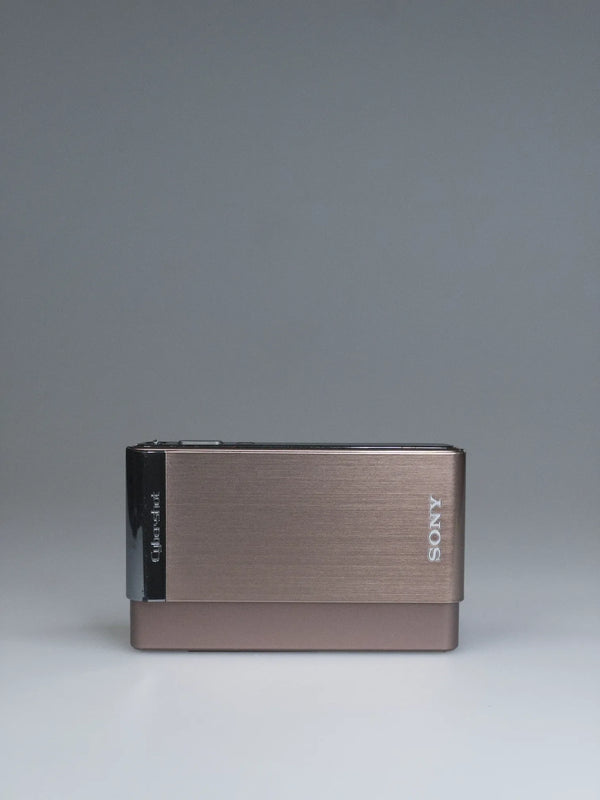
- Choice. Many digicams were sold in Japan under different names and in colours that never reached Europe. Our model names guide explains why the same Canon is an IXUS here and an IXY there. Sony's Cyber-shot TX1, for example, came in gold only in Japan.
- Protection through eBay. eBay's Money Back Guarantee covers you if the camera doesn't arrive, or arrives broken, faulty or different from the listing, even when the seller doesn't accept returns.
- The price you see is usually the price you pay, up to €150. For parcels up to €150, eBay collects the VAT at checkout, so there should be nothing more to pay on delivery.
WHAT DOES IT REALLY COST TO IMPORT A CAMERA INTO THE EU?
More than it used to. Since July 2021, every parcel from outside the EU pays import VAT, whatever its value. The old €22 exemption is gone. In 2026 the EU added new charges on top:
- Up to €150: since 1 July 2026, a flat €3 customs duty applies per product category in a parcel. Since 1 November 2026, there's also a €2 handling fee per category, whatever the value. On eBay, VAT is collected at checkout for these parcels.
- Over €150: eBay doesn't collect the VAT. You pay import VAT and any customs duty when the parcel clears customs, usually to the delivery company.
- Carrier fees: when a delivery company pays the charges for you, it adds its own fee. Deutsche Post currently charges €7.50, according to Germany's consumer advice centres.
So compare the total cost delivered to your door, not the listing price. Germany's customs website has a calculator if you want to check before you buy.
WILL THE MENU BE IN JAPANESE?
It might be, and you can't always change it. Sony's own support pages say the language setting isn't available on cameras bought in Japan, and that English isn't available on cameras bought in China. Some sellers state this clearly, with titles like "No English Menu". Others don't mention it. Before you buy a camera from Japan, look for a photo of the menu screen in the listing, or ask the seller which languages it offers. If you can't read Japanese, a Japanese-only menu makes even setting the date a puzzle.
WHAT DOES "JUNK" MEAN IN A JAPANESE LISTING?
In Japan, ジャンク (junk) means sold as-is, with no promise that it works. Listings often add 動作未確認, "operation not confirmed", or 現状品, "sold in its current state". Some sellers say outright that they haven't checked the camera at all and can't judge faults like mould or haze in the lens. A Japanese guide for camera resellers points out that "junk" sometimes only means the shop couldn't test it, for example because the battery or charger was missing. That's a gamble you can win, but it's still a gamble. If a listing translated from Japanese says "junk", "as-is" or "untested", price it as a camera that may not work.
CAN A CAMERA WITH A BATTERY BE SHIPPED FROM JAPAN?
Usually, but with conditions. Japan Post only accepts lithium batteries by international mail when they're fitted inside the device, within size limits, with no more than two battery packs per parcel, and only to countries that accept them. Its list of destinations changes: in August 2024 it stopped accepting lithium batteries for Spain, Sweden, the Czech Republic, Hungary, Bulgaria, Croatia and Greece, among others. So a spare battery may not be allowed in the parcel at all. Check exactly what's included, and see our battery and charger guide for finding replacements in Europe.
WHAT ABOUT CHARGERS AND PLUGS?
Japanese plugs don't fit German sockets, so you'll need an adapter. Before you plug a charger in, check its label for the input voltage it accepts. An adapter changes the plug shape, not the voltage.
WHAT ABOUT BUYING FROM CHINA?
China has its own huge CCD camera craze. Chinese media report that old compacts became a youth trend driven by social platforms like Xiaohongshu and Xianyu, and that some dealers buy cameras in bulk from overseas to resell at home. The same rules apply as with Japan: look for photos of the actual camera, sample shots, a clear statement of what was tested, and the menu languages. As Sony notes, English may not be available on a camera that was sold in China.
WHAT IF SOMETHING GOES WRONG?
Open a case through eBay within 30 days of delivery. If the camera is broken or not as described, the seller is supposed to cover return shipping. In practice, sending a parcel back to Japan or China takes time, and buyers on eBay's own forums describe arguments over who pays for international return postage. A return because you simply changed your mind is not covered by the guarantee. If you paid import charges, you can reclaim import duties from customs after returning the goods, but the new handling fee isn't refunded.
HOW DO YOU BUY SAFELY FROM JAPAN OR CHINA?
- Read the condition in plain words, and avoid "junk", "as-is" and "untested" unless you're happy to repair it.
- Look for photos of the camera itself, sample photos taken with it, and a photo of the menu.
- Ask which languages the menu offers.
- Check exactly what's included: battery, charger, cable, memory card.
- Check the total delivered cost, including VAT and the 2026 customs charges.
- Pay through eBay checkout, so the Money Back Guarantee applies.
If you'd rather skip the customs, the wait and the language checks, a seller inside the EU is the simpler route. Our guides to buying a used digicam in Germany and what a fair price includes cover what to look for. Every camera we list is tested and checked before it goes up, and anything that isn't right is written into the condition notes.