The word, the cameras, and why Europe is digging them out of drawers again
Guide · Basics · Updated November 2026
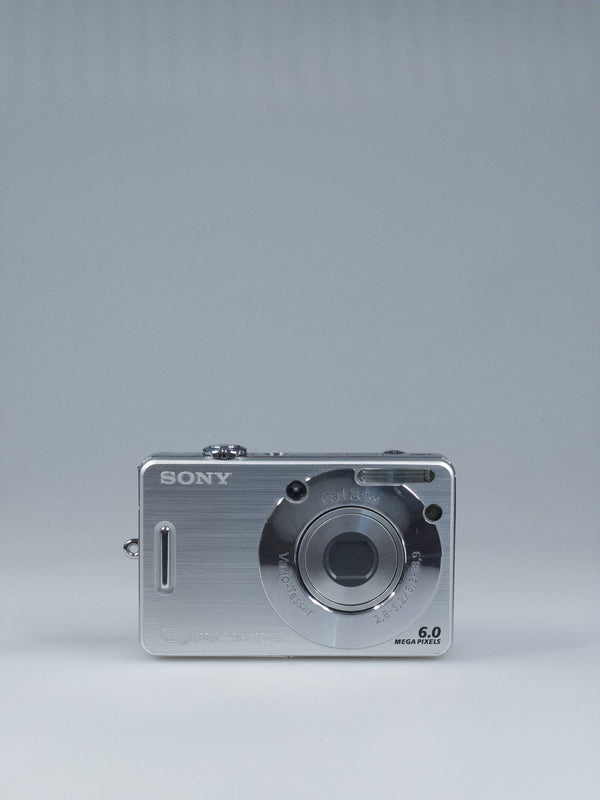
A digicam is a small compact digital camera, usually from the 2000s or early 2010s: a fixed zoom lens, a built-in flash, a small sensor and a body that fits in a jacket pocket. German listings call it a Digicam, a Digitalkamera or a Kompaktkamera. In Japan it's a コンデジ (kondeji, short for compact digital camera), and in China it's often just called a CCD camera. They all mean the same thing: the point-and-shoot everyone carried before the smartphone took over.
WHAT IS A DIGICAM, IN SHORT?
WHAT MAKES A CAMERA A DIGICAM?
A fixed zoom lens. The lens can't be swapped. On most models it slides out when you switch on and folds back flush when you switch off. Typical zooms are 3× to 5×, and travel zooms like Panasonic's Lumix TZ series went to 10× and beyond.
A small sensor. Digicam sensors are tiny compared with a modern camera's, usually somewhere between 1/2.5 and 1/1.7 inch. That's a big part of the look: deep focus, a little noise, and colour that the camera's own processing decides.
A built-in flash. The flash is what makes the classic digicam photo. It only reaches a few metres. Canon rates the flash on the 2017 IXUS 185 at 50cm to 3m at the wide end, so faces close to the camera come out bright and the background falls into the dark.
CCD or CMOS. Most 2000s compacts use CCD sensors, which people now hunt for their warm colour with flash. From about 2010, most makers moved to CMOS. Panasonic's TZ travel zooms, for example, used CCD sensors until the TZ20 switched to MOS in 2011. Cheaper cameras kept CCD for longer: Canon's IXUS 185 still had a 20-megapixel CCD in 2017. Our night-out guide explains what that means for your photos.
WHY IS EUROPE BUYING DIGICAMS AGAIN?
Germany. In 2026, Kleinanzeigen reported a clear rise in searches for nostalgic products from the 90s and 2000s, naming digicams alongside Walkmans and iPods, and said prices were climbing noticeably. A YouGov survey of 2,226 adults in Germany in March 2026 found that 24% of Gen Z and Millennials deliberately buy things they couldn't afford or get when they were younger. A third of them (33%) see nostalgic products as a counterweight to the fast, always-online world.
Berlin. The Berliner Zeitung ran a column on the comeback, puzzled that young people would carry a 2000s camera to parties and concerts when everyone has a phone. That's exactly where people use them.
The UK. eBay said searches for "retro digital camera" rose 47% year on year between May 2025 and May 2026. Back Market also reported selling more cameras.
The industry figures. According to Japan's camera industry association CIPA, compact cameras shipped to Europe rose 24.8% in units and 36.4% in value in 2025. Worldwide, compact shipments grew 29.6% to 2.4 million units. Those figures include new premium compacts, not only old-style digicams, but the direction is the same.
IS THE TREND BIGGER IN JAPAN AND CHINA?
Asia got there first. In Japan, the business magazine DIME reported in 2024 that market prices for some old compacts had risen about twentyfold in a year. In China, Xinhua visited one building in Shenzhen's Huaqiangbei electronics district in November 2024 and found dozens of shops selling second-hand CCD cameras, plus shops that only buy and repair them. By October 2026, posts tagged "CCD" on Xiaohongshu had drawn close to 7 billion views, and cameras once worth a few hundred yuan were selling for more than 1,000. In Google searches, "digicam" reached a ten-year high in 2026.
HOW DO YOU PICK A DIGICAM?
- Decide on the look. A CCD camera with the flash on for the classic party photo, or a later CMOS camera if you want to shoot in dim light without flash.
- Learn its European name. The same camera can have three names depending on where it was sold. Our IXUS, ELPH and IXY guide decodes them.
- Check the card and battery. Old cameras use old memory cards. Our memory card guide covers which one you need.
- Buy tested. A camera that switches on isn't the same as one that takes good photos.
WHICH DIGICAM SHOULD YOU START WITH?
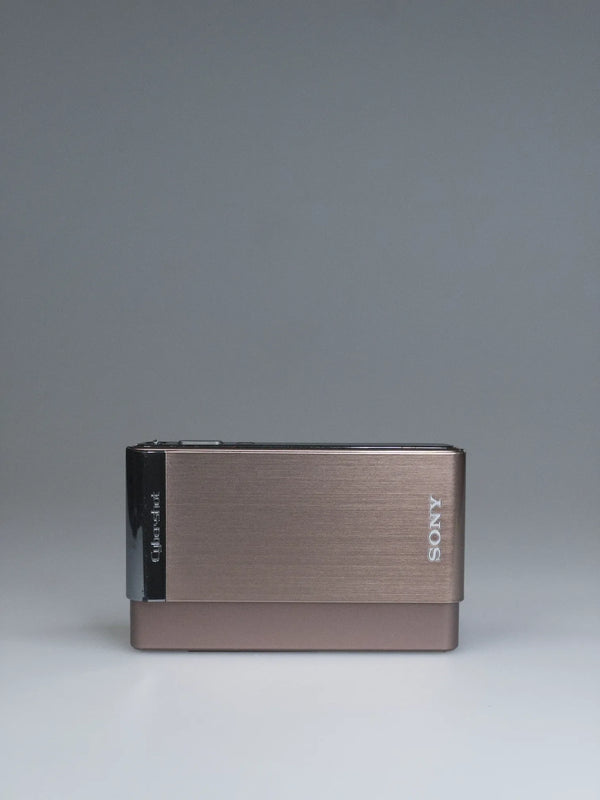
The Panasonic Lumix FX30 from 2007 has a 28mm Leica lens and optical stabilisation in a body 22mm thick. The Sony Cyber-shot T70, also from 2007, has an all-metal body and a sliding cover that switches it on. The Casio Exilim EX-Z2 is 15.8mm at its thinnest, with a lens that sits flush when it's off. The Nikon Coolpix S50c from 2007 has a wave-shaped metal body and built-in Wi-Fi, which was rare at the time.
IS THE DIGICAM TREND HERE TO STAY?
A digicam is simply the compact camera of the 2000s and early 2010s, and the reason people want one now is the photos. Germany, the UK and the rest of Europe have caught the trend that started in the US, Japan and China, and the shipment figures say it isn't going away. Every camera we list is tested and checked before it goes up, and anything that isn't right is written into the condition notes.